


We all know the saying: “Assuming makes an ass out of you and me.” But boy howdy, do we all still make them.
Earlier this year, I had the awesome opportunity to work with some of my closest colleagues and put together the Chicago Queer Wedding Show. It was an evening made by and for LGBTQ+ people, a place for queer couples to find vendors who were not just “open” to working with them, but excited to, who knew their experience firsthand and would see them for who they are. Every business in attendance was queer-owned and operated, something that many of the couples walking through the venue seemed to deeply appreciate. Getting married as a queer person can be challenging and scary to say the least. It can be a huge relief to know that the people working on your special day are fully prepared to leave the traditional script behind, and to make your wedding about you.
The Chicago Queer Wedding Show was a great success. And, it was the first of its kind, a sign that we still have a long way to go.
The other creators and I are headed to a panel next week hosted by Chi Thee Wed to discuss this topic more. What does it mean, as wedding vendors, to be a safe and supportive business for our potential clients? What does it mean to be actively inclusive rather than passively supportive? How can we get away from general platitudes about inclusivity and openness, and commit to explicitly welcoming the LGBTQ+ community as a whole?
There’s a lot of answers to that question. But my answer, as both a queer person and someone who has worked in the wedding industry for over eight years, comes right back to this blog’s word of the day: assumptions.
There might be no other industry in the world more plagued with assumptions than the wedding industry. We assume there’ll be a bride in a white dress and a groom in a black suit, and the bride’s father walking her down the aisle to meet him. We assume how people will be dressed, what kind of speeches will be given, and what kind of music will be played. You could make 100 different assumptions per wedding about what usually gets done–what “should” be done–from the beginning of the process to the end.
When it comes to weddings in particular, we’ve all been handed the same script by a culture that has a lot to say about love: how it happens, how it looks, who it’s with. But for every assumption, there’s an exception, and for every tradition in a wedding, there’s a different way of doing things that better fits the couple and their story. Nobody fits this script perfectly, and as queer people, we often feel like the script didn’t plan for us at all. When every step of the process feels so steeped in tradition and so completely committed to gender roles, how are you supposed to find a wedding vendor that you trust, one that will see you for you?
We all make assumptions. But the simple truth is this: anytime you assume something, you’re leaving someone out. There will always be someone who doesn’t fit the traditional script, who needs to be taken as they are without pretense in order to understand them fully. And because of how easy assumptions are to make, you might be leaving these people out without ever realizing it.
The good news is, all assumptions can be challenged once you’re aware of them, and doing so is the first step toward not only building a more inclusive business, but living a more inclusive life. I’m trying to live my life not to make an ass out of you or me, and if that’s a desire you share, you’re in the right place.
The following list is just some of the things I’ve noticed as a queer person in the wedding industry, and ideas for how to make our industry more welcoming, not just to queer people, but to everyone. The best way to remedy accidentally excluding someone is to start actively including them, and that work can be done in every step of the process.
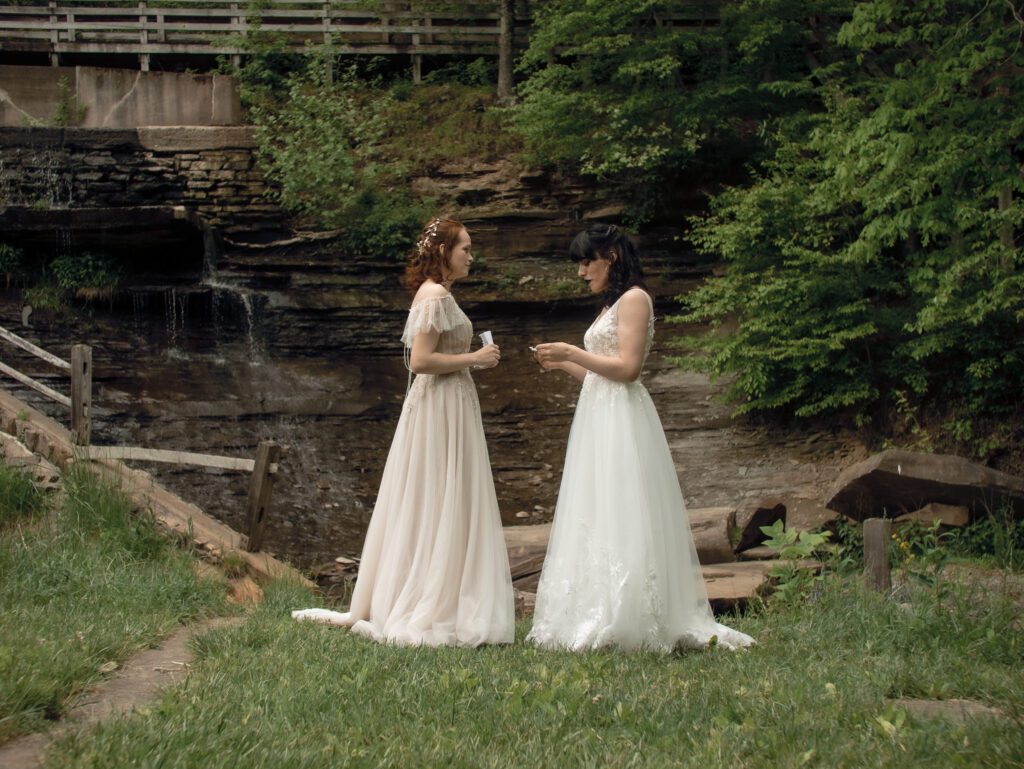
Assumed Language: Not Every Client is a Bride
The very first assumption made about any wedding is that it will be between one man and one woman, and that these people will use the titles of groom and bride, respectively. Obviously, you know that isn’t always true; it’s 2026. But, there might be more subtle ways in which this assumption is still baked into your business, and they’re the kinds of details that will, at the very least, give most queer people pause, if not outright turn them away.
It starts with the choice of words on your website and in your contracts. You may think the phrase “bride and groom” in place of “the couple” is just a harmless detail; it’s a bride and a groom most of the time, right? But this choice of wording is one of the first things a queer couple browsing your website or socials is going to see. Whether they’re two brides, two grooms, or describe their relationship with different language entirely, it sends the signal that their love isn’t part of the plan, but an exception to it.
To many straight people, this may seem trivial. But keep in mind, this is a queer person’s first impression of you and your business. They’re looking through your advertising not just to see if you’ll be a great fit for their wedding, but if you’ll accept and support them. They risk more than an awkward ceremony or a bad hair day when they decide to share their orientation with a stranger; they risk their comfort, their privacy, and sometimes even their safety.
Simply put, the stakes are higher. “Bride and groom” not only does nothing to reassure them of your safety; it also frames their relationship as something so novel and rare that it isn’t even worth mentioning. Rather than an open door, they’re met with a closed door that they have to ask permission to enter. And, because queer people are very used to wondering if we’ll be accepted everywhere we go, details like this are enough to get that couple to walk away and try somewhere else instead.
It takes no more effort to use gender neutral language in this situation than it does to write “bride and groom.” If anything, think of this as a fun opportunity to try out new terms! “The Couple” works just fine, but so does “lovers,” “nearlyweds,” “spouse-to-bes,” or “the betrothed.” There’s plenty of options out there! And if all else fails, you can simply stick to neutral wording for your website and contracts, and ask the couple what they prefer when the time comes.
It’s important to note that straight and cisgender people can benefit from this gender neutrality, too. Given the option, many couples actually prefer to use different words to describe themselves and their relationships, as is evidenced by people like wedding photographer AJ Abelman. AJ has spoken publicly on her social media about the term “bride,” and how, even as a cisgender woman, it doesn’t feel right for her. More people than you may realize will appreciate the chance to tell you who they are and speak for themselves!
For venue owners and planners, removing this assumption from your spaces can go a long way as well. I can’t tell you how many lush, floral, aggressively white and pink bridal suites I’ve been in, only to head to the groom’s space and find it lacking. The rooms given to groomsmen are often smaller, blander, and sometimes even darker, lacking in adequate natural light to see what they’re doing as they get ready for the ceremony. Some groom’s spaces I’ve been in didn’t even have a mirror, as if no one in there would want to check their cuffs or adjust a tie!
This feels drenched in traditional gender expectations, of course, in a way that even many straight couples might find misaligned and disappointing. But what happens when a queer couple shows up? How do they decide who gets the luxury suite with vanity mirrors and who gets the leathery closet with no natural light? What if both sides need to do hair and makeup? What if neither of them do? Providing two relatively equal spaces, both equipped for getting ready, and without signage that assumes the gender of the people in them, can make your space more inviting for queer and straight people alike.
And if you’re one of those businesses that only takes “the bride’s” info during intake because you’ve assumed she’s the only one who cares to do the work…time to change that, too, buddy. Time to change that, too.
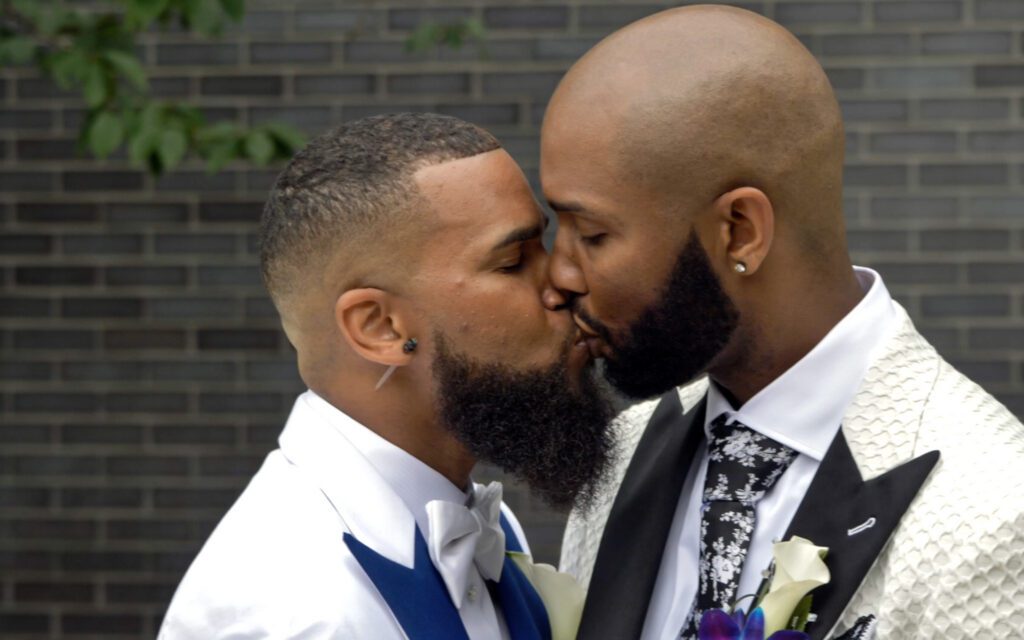
Assumed Comfort: Not Every Client Enjoys the Spotlight
Another assumption made about weddings is the amount of physical affection we expect the new couple to share. Whether it’s a dip and a kiss at the end of the ceremony, or clinking glasses during the reception to prompt them to kiss again, we as wedding vendors and guests are generally encouraging our couples to show off their love. But not everyone wants to be that intimate at their wedding, either in front of their family or in front of the cameras, and that’s totally fine!
Queer couples in particular may have their own reasons for wanting to share less physical affection, especially on camera. Once again: the stakes are higher. While they can (hopefully, but not always) be sure that their loved ones in attendance are supportive, not everyone else will be, especially on the internet. But it goes beyond that, too. I, for example, have filmed couples in arranged marriages, and their comfort level was much different than what many vendors assume to be the default. Thankfully, I include questions about my client’s comfort with touch and intimacy during onboarding, so I already knew ahead of time what they expected and came prepared to work with them. And these expectations can be different for any number of reasons, be it cultural, religious, familial, or just a simple matter of personality.
Removing the assumption that couples should publicly kiss and display their affection brings consent to the forefront, and allows the couple to define their own comfort level for the day. And this makes the entire day better for everyone, vendors and couples alike. Knowing what’s okay and what’s not, and working with a couple that feels empowered to tell you those things, brings everyone a greater sense of ease that would be possible if we were all just guessing.
In my experience, a simple 1-5 scale works wonders. I ask my clients how comfortable they are with touching on camera, with a 1 being “holding hands at most” and a 5 being “making out.” Both me and my clients benefit from having this spelled out ahead of time. We can all relax and be assured that no awkward, uncomfortable requests will be made that dampen the mood.
This applies to photographers and videographers, of course, but also to any kind of vendor that has the chance to influence how intimately the couple behaves. Whether you’re a DJ, officiant, or emcee who’s called on people to kiss before checking in, or any other vendor that has pressed for a kiss to create a romantic moment, couples of all kinds could benefit from an increased awareness of consent. No one wants to be forced into intimacy just because that’s what they “should” be doing.
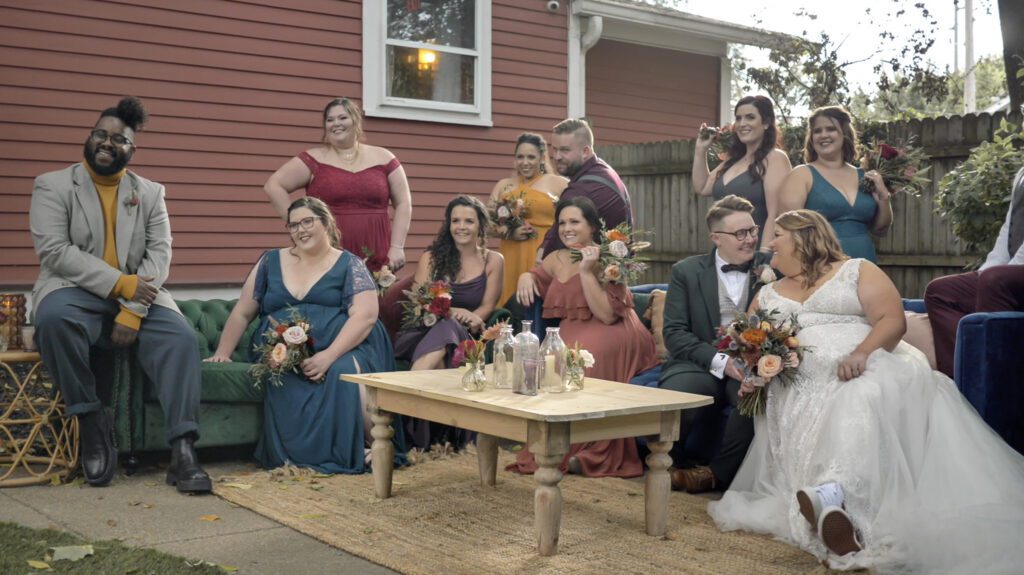
Assumed Representation: Not Every Client Wants to Be in Your Marketing
Another way queer couples may check the safety of your business is by looking for other LGBTQ+ couples in your marketing. Of course, if you want to let the queer community know that you’re safe to work with, including queer couples you’ve worked with in the past into your advertising is a very effective way to do it. But there are a few things to look out for, particularly, the assumption that every queer couple you work with wants to be shared with the world.
There’s no overstating how bad things have been for the queer community lately, especially for trans and non-binary people. Entire communities exist online dedicated to the harassment and doxxing of trans people. This can lead not only to mental turmoil and trauma, but being outed against their will to family, neighbors, employers, and anyone else with the power to harm them. These things can ruin–even end–a trans person’s life.
As I said in the last section, safety is a very big concern for queer people, because all it takes is one outing, or misjudging the good will of one person, for our entire lives to turn upside down. If a queer person requests not to be used in public marketing, they likely have a very good reason and should always be respected.
Furthermore, it’s possible for an LGBTQ+ person to feel tokenized by their inclusion in a marketing campaign or social media post, regardless of your personal intentions. Unfortunately, it’s all too common for businesses, particularly large corporations, to participate in “rainbow washing.” This refers not just to releasing rainbow-colored logos and merchandise in June only to pull them back in July, but to the deeper motive behind that decision: appearing supportive of the LGBTQ+ community, without making genuine efforts to improve LGBTQ+ rights or conditions in any meaningful way.
Many of us queer people, especially after Trump’s second election when we saw many many of these big companies pull back their support, are suspicious of the motives behind such advertisements. The hollow, fair weather support of rainbow washing is less genuine care for our rights as people, and more an attempt to convince us of that care long enough to get our money. It only makes sense to be skeptical of other companies doing the same.
But, let’s assume you do care, and you have the best of intentions. How do you use LGBTQ+ people in your marketing in a considerate way that doesn’t tokenize the people you’re trying to represent?
The first part, once again, is consent. Ask the person or couple you’re thinking of if they’d be comfortable being online and attached to your brand. It’s one thing for a hundred of your loved ones to hear your vows; it’s a whole different thing for your vows to go viral in the name of drumming up business. If they are comfortable with it, a testimonial goes a long way to prove to prospective clients that their support is legitimate. And if they aren’t comfortable with it, cut your losses and respect their decision. No questions asked.
Secondly, avoid putting the same queer couple everywhere in your marketing, or posting about them anytime you want to show your support for queer rights. If you’ve only worked with one queer couple so far, that’s okay! We all start somewhere. But, it’s best to avoid the appearance that you’re using this one couple just to prove that you’re an ally. Include them in a post or two, and leave it at that. The people who are looking for it will see it, without feeling like someone else in their community was used as a virtue signal.
Assumed Allyship: No One Can Read Your Mind
Finally, I want to talk about an assumption that many straight people make about allyship, and I want to articulate not just how it applies to weddings or business, but to leading an inclusive and supportive life overall.
I’ve talked a lot about safety in this blog, and how important it is for queer people to trust who they’re working with before they disclose their identity and let their guard down. If you’ve read this far, odds are you see yourself as a supportive person, and you’re doing your best to learn and grow because of it. But none of this advice really matters if you’re quiet about it. In a world of loud bigots, it’s not enough to be a quiet supporter. You need to be an even louder advocate. That’s where allyship really begins, and that’s what queer people are looking for to know they’re really safe.
The easiest way to do this is to simply be specific. It’s one thing if your website describes you as “inclusive and welcoming.” It means a lot more if you say “I believe in the rights of all people to love and get married, including queer, trans, and non-binary people, and I aim to treat all my clients equally without exception.” That does a lot more to dispel the doubts of a potential client than a vague platitude ever could.
You may have thought to yourself just now, “But if I write something like that, people can get upset! I might get nasty messages and lose the support of some of my other clients!” I’d like to challenge that thought gently and say: that’s the point.
Queer people risk something when we come out. We risk the rejection of our family, the ridicule of strangers, the loss of our religious communities, and so much more that I can’t even list. It’s a tough world out there, and standing alongside queer people means assuming a small amount of that rejection and risk. But that’s what makes it more than an empty platitude, more than tepid half-support or rainbow washing deceit. Loud, unambiguous support that risks real consequences is the only kind of support we can be absolutely sure is real. And that really counts.
The best piece of advice I can give you is to check your crowd. Do you work with clients and vendors who hold homophobic beliefs? Do you hear bigoted remarks in your networking circles, but say nothing about it for fear of consequences? Are there any queer people already in your life? I hate to say it, but it doesn’t really matter what’s in your heart if your actions don’t align and support it. What you tolerate is what you stand for, and if queer people see that the people around you wouldn’t support them, they’re likely going to assume the same about you.
It may cost you something to stand up for the LGBTQ+ community. But that’s what makes it real. Anything you say that is worth something, costs something. Allyship means being ready to accept those costs, to assume a small piece of the burden all queer people endure, because you believe in our rights as people, and you’re willing to stand for something to support them.
The wedding industry is so full of assumptions, no one blog post is going to cover them all. We didn’t even cover the assumption that all “groomsmen” will be men and all “bridesmaids” will be women, and what message that sends about men and women that are friends. We didn’t get into the assumption that the father will walk the bride down the aisle, or that in a lesbian wedding, one partner still wears a suit and the other a dress. Or that two women getting married use the term “lesbian” for their relationship. Hey, even “couple” assumes just two people are getting married, and there’s a whole world of polyamorous people out there waiting for recognition of their love. Assumptions about how marriage “should” be done are in our industry down to the very core, and it’s worth taking the time to wonder about and challenge them anytime we think of a new one. We could always be serving our clients better by getting to the root of what all these traditions mean and finding ways to talk about and change them.
And not only does confronting these assumptions improve the experience of queer and straight couples alike, but it also provides us a framework for thinking about assumptions of all kinds. All the “shoulds” of a traditional wedding get it the way of other groups of people, too, and practicing a healthy amount of reflection in our business decisions can benefit these people as well. We may work for disabled people, only to realize we’ve made assumptions about first dances and walking down the aisle. We may work for interracial couples, only to realize we’ve made assumptions about how to light our photographs for lighter skin tones, or what kind of traditions to expect at the reception. We may work with orphaned people, or autistic people, or people from different religious or cultural backgrounds. We may work with people eloping, or remarrying, or any other number of things, and realize we need to deviate from the script we had in our head in order to make their special day right. And we need to be ready to do that, because helping to celebrate the love of our clients is worth it.
Inclusion is not just what we silently believe inside. It manifests in all our decisions, from how we write our contracts, to how we design our venues, to how we behave as the head of our business for all other clients and vendors to see. It’s a complicated, multifaceted, intersectional process, and I certainly don’t have all the answers. But, as one wedding videographer and one member of the LGBTQ+ community, I think I know a good place to start: we all need to make less assumptions, and we all need to be willing to stand up when other people do.
One of the best ways to practice allyship in your personal life is to follow LGBTQ+ educators and creators and stay up to date. Here’s a list of some of my favorites that I hope you will consider checking out:




View comments
+ Leave a comment